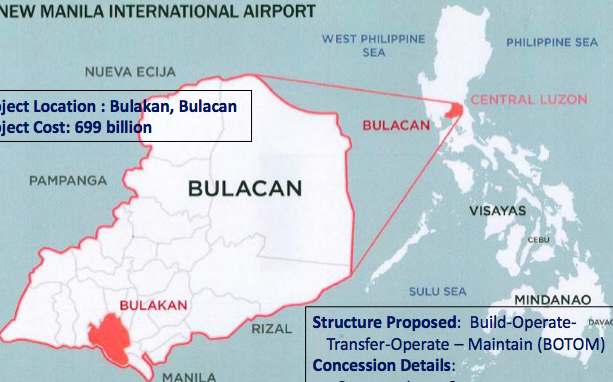
https://business.inquirer.net/files/2017/02/Location-of-the-proposed-P700B-Bulacan-airport-SMC.png
Barasoain Church

The olden times…
Barasoain Church, also known as Our Lady of Mt. Carmel Parish, is proverbial for its historical importance among Filipinos.
Barasoain Church was founded by the Augustinian Missionaries in 1859 and served as the session hall of Malolos Congress, the first congress in the Philippines which was held on September 15, 1898 under the presidency of Pedro Paterno. Three major events in the Philippine history happened in this church: the convening of the First Philippine Congress (September 15, 1898), the drafting of the Malolos Constitution (September 29, 1898 to January 21, 1899), and the inauguration of the First Philippine Republic (January 23, 1899).
The origin of the name…
The term “Barasoain” was derived from a place in Spain to which the missionaries found the place in Malolos in striking similarity. When the Spanish-Filipino revolution broke-out, the revolutionaries coined the term “baras ng suwail” meaning “dungeon of the defiant.”
The moments in Philippine history…
In 1898, the First Philippine Congress, more widely known as the Malolos Congress, and formally known as the National Assembly, headed by Don Pedro A. Paterno, was held in the Barasoain Church. This led to the drafting of the Malolos Constitution a year later; and finally, the inauguration of General Emilio Aguinaldo as the President of the First Philippine Republic (also known as the Malolos Republic), a revolutionary government.
The church was the scene of the proclamation of Philippine Independence and Former President Joseph Estrada when he took his oath of office.
https://www.vigattintourism.com/tourism/articles/Barasoain-Church-Cradle-of-Democracy-in-the-East
https://www.bulakenyo.ph/barasoain-church-the-site-of-the-first-philippine-republic/
Verdivia Falls

Verdivia Falls can be found in Talbak, Doña Remedios Trinidad, Bulacan sitio. If you want to enjoy cool waters and safe unchlorinated swim, This is definitely recommended. Not so far from Manila, Dona Trinidad is absolutely worth the try more than what a swimming pool or hotel resort can offer in the province, north of Luzon – Bulacan.
Here, you can rappel or go rafting. The Talbak Valley is also known for its sweetest Luzon pineapples which is abundant during fruit season in summer. Hospitality will also face you from the upland farmers of this part of the province as the people are warm and welcoming.
Mt. Gola

Mt. Gola is also located at Sitio Madlum in Brgy. Sibul, San Miguel, Bulacan. Most of the tourists or mountaineers who have visited the place opted to try the twin day hike, Mt. Manalmon + Mt. Gola. However, if it’s your first time to this type of outdoor adventure – better try the Mt. Manalmon first then go back in another day to try Mt. Gola.
Some climbers say that it’s almost the same level as Mt. Manalmon but based on my experience – it’s a little bit harder.
Pinagrealan Cave

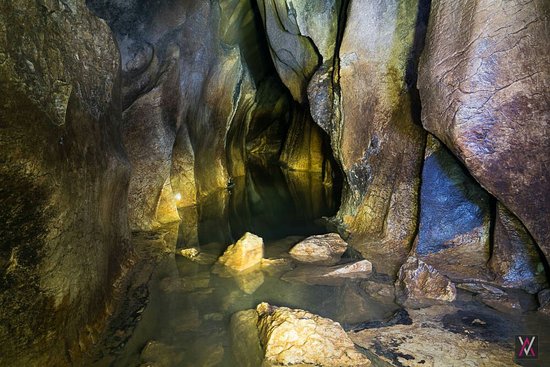
Pinagrealan cave is a subterranean network of cave in Norzagaray Bulacan is full of history and untold story. This is a natural refuge used by Filipinos during struggle against Spain and the Americans and during the last world war.
Year 1896 the cave was a site of secret meeting and a camp of the Filipino revolutionary forces during the war against Spain.
In the year 1898, during the Filipino-American war, it was used as hideout of General Emilio Aguinaldo (The first President of the Philippines)
It was also used as a sanctuary by the Japanese Imperial Army when the Philippines was liberated by American Forces.
Grotto of Our Lady of Lourdes

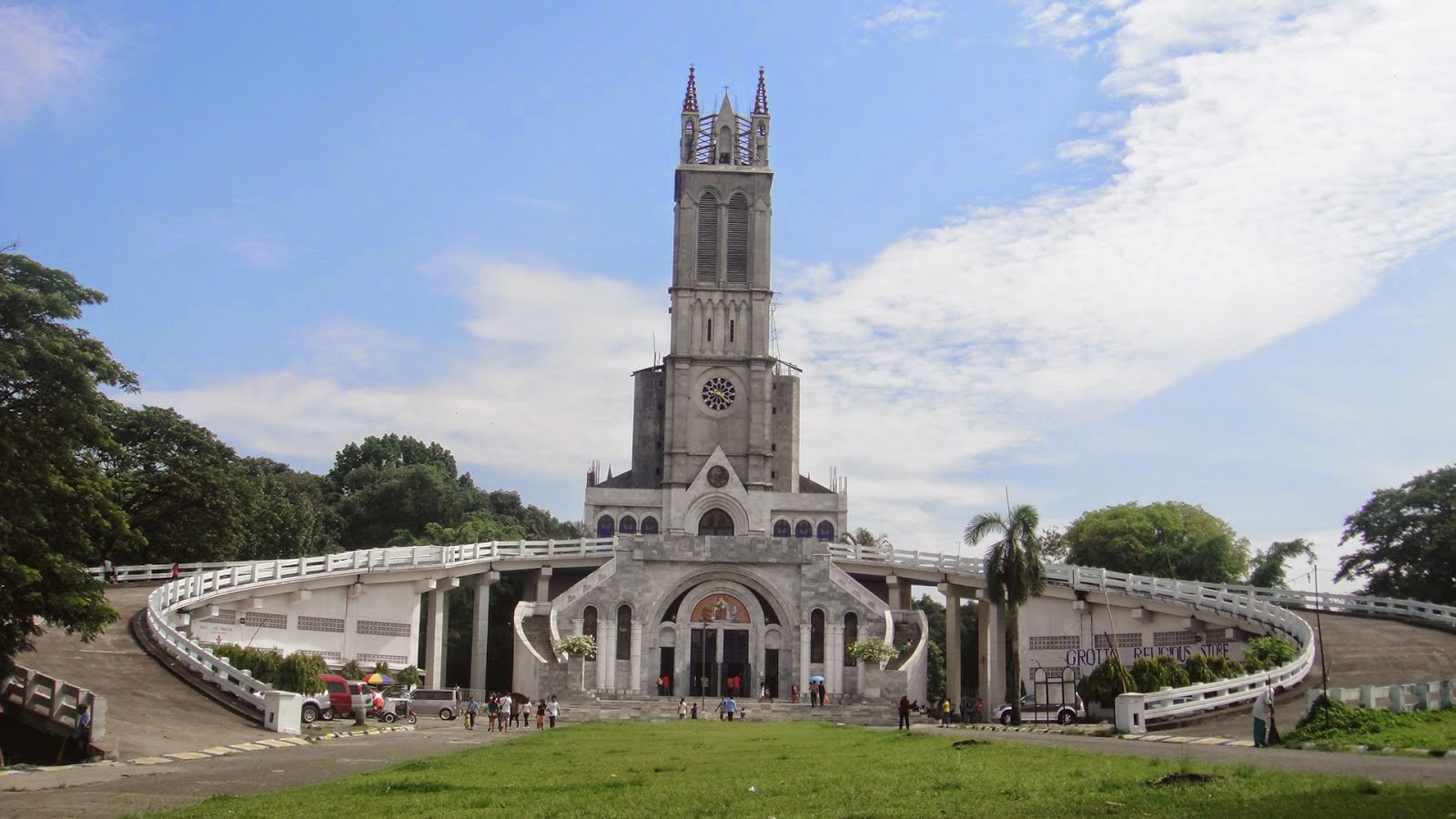
Our Lady of Lourdes Grotto is a good place for many tourists and pilgrims to be solemn and ponder over their life. Located at Barangay Graceville, San Jose del Monte City, the church offers a lot of things that will bring spiritual satisfaction to anyone who visits.
Miracle of Our Lady of Lourdes
The cathedral is a replica of the Church of Lourdes in France. It was built as a sign of gratitude and belief of an ordinary Filipino who had cancer and was healed by his faith in Our Lady of Lourdes. When he came back to the Philippines, he shared what God has given to him – new hope and new life – with people who are sick, desperate, and misguided.
https://www.vigattintourism.com/tourism/articles/Our-Lady-of-Lourdes-Grotto
Marcelo H. Del Pilar Museum

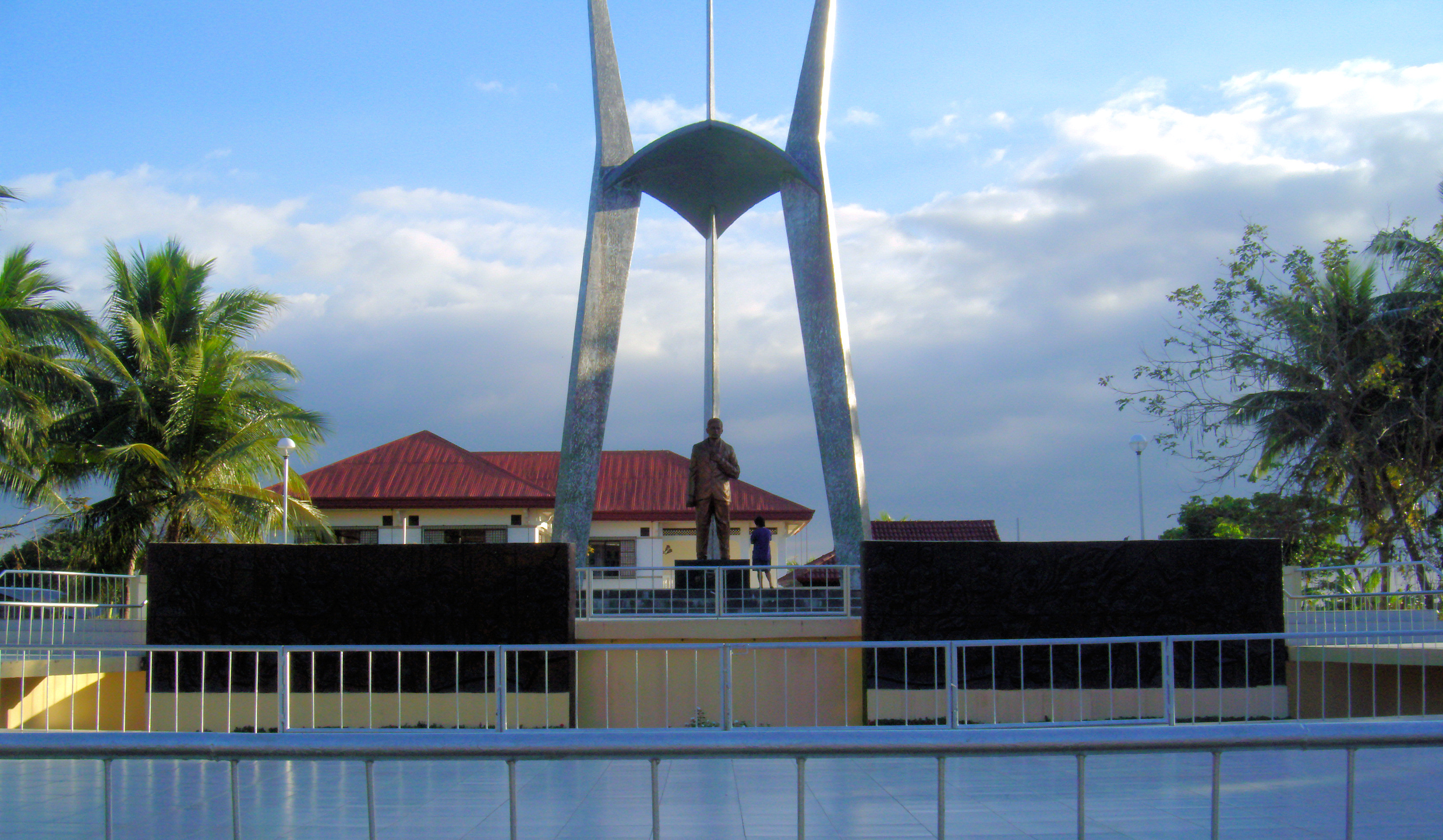
The Marcelo H. del Pilar National Shrine stands in Sitio Cupang, Barangay San Nicolas, Bulacan. It is located on the same property where Marcelo H. del Pilar was born and raised before he left for Spain in 1888. The over 4000-square-meter land contains the 10-foot Marcelo H. del Pilar monument, the del Pilar family mauseoleum and a two-storey bahay na bato (stone house) which serves as the museum.

Marcelo H. del Pilar was a lawyer and writer who wrote using the pen name Plaridel (an anagram of del Pilar). He wrote Caiigat Cayo to show his support for José Rizal’s first novel Noli Me Tangere and to contradict a friar’s attack of Rizal’s masterpiece. Del Pilar and Pedro Serrano wrote the satirical book Dasalan at Tocsohan (Prayers and Mockeries) and Pasióng Dapat Ipag-alab nang Puso nang Tauong Babasa (Passion That Should Inflame the Heart of the Reader). He was most known for being the last editor of the Reform Movement newspaper La Solidaridad. For five years, he virtually single-handedly funded the publication of the newspaper in order to advance his wishes for his native land. Del Pilar wanted assimilation of the Philippines as a province of Spain, removal of Spanish priests and the placement of Filipino priests in their stead, equality of Spanish and Filipino before the law, and Filipino representation in the Spanish Cortes (things that any Filipino student should know by heart). On July 4, 1896, del Pilar died of tuberculosis in Barcelona, penniless. The Reform Movement failed to achieve its goals but its teachings inspired the foundation of Katipunan and the events leading to the Philippine Revolution.
Baguio of Bulacan : Hilltop

Dubbed as the “Bagiuo of Bulacan”, its breathtaking scenic view of the Sierra Madre Range does not fail to mesmerize every tourist that visits the place.
https://www.bulacan.gov.ph/tourism/touristspot.php?id=26
Guiguinto Old Train Station

Built in 1661, the Estacion de Guiguinto (Guiguinto Train Station) is the towns most acclaimed historical landmark and heritage site. It was upon this site that the Katipuneros (Filipino guerillas during the Spanish Regime) ambushed a train from Dagupan, killing six friars, including the parish friar of Guiguinto, Fr. Leocadio Sanchez, and a Spanish doctor. The incident inspired Severino Reyes to author the novel “Opera Walang Sugat” which was later made into a movie entitled “Walang Sugat.”

 Beauty Spots in Bulacan